Feeds:
Posts
Comments

Archive for the ‘Ethnobotany’ Category

In 2011 I will be sharing with you why you need to respect and bring native plants into your life.  I will be doing this in a pragmatic way. First I am going to take up the post-a-week challenge made by WordPress and will be updating my blog weekly. 

 I will share with you why it is so imperative that humans stop destroying their natural environment.  I will share with you the science behind why native plants are so important.  I will teach you to identify native plants so that you can start visiting them in the wild places and start bringing them back into your health and wellness regimes, your yards, your cities and biomes.

I will be listing more activities found in Cascadia (the area from British Columbia to Northern California) that will help you connect with the both native plants and those who can teach you what you need to know.

You can help me.

Tell me what is going on in your area of the world that inspires others to protect native plants.  Share inspired comments to this website (skillshare).  Tell others about this website and this project.

I will be learning more about the technology offered by WordPress and available on this website.  I promise to learn how to tweet, digg, RSS, etc. I know I can do it, I know I can do it…

I will be publishing my book as an e-book during 2011.  It will include illustrations and watercolors that I have completed of native plants, plant identification charts, maps, and other useful information.  This book has 18 chapters.  Here is preview of the chapters.

Table of Contents

Introduction: finding our way back, reconnecting with the plant world. 1

Chapter 1. Plant Community, human community (White Oak) 5

Chapter 2. Learning the lay of the land (Oregon Grape) 11

Chapter 3. How to identify and “key” native plants (Miner’s lettuce) 19

Chapter 4. Building shelters from plants (Willow) 27

Chapter 5. Growing your own fibers: Grasses, sedges, tules and fiber plants (Cat-tail) 29

Chapter 6. Seeds and wild plants. What is valuable?. 31

Chapter 7. The great harvest (Wapato) 33

Chapter 8. Digging in the dirt- exploring earthworms and mycelium.. 35

Chapter 9. Using native plants as medicine (Pacific Ninebarks) 37

Chapter 10. Spring plants in Cascadia (Nettles and the potherb) 39

Chapter 11. Stalking the wild plant – Tools, geography, maps (Horsetail) 41

Chapter 12. Fermenting the bounty (Red and Blue Elderberry) 43

Chapter 13. Bringing the native plant and pollinators home. 45

Chapter 14. Twenty important native plants you need to know.. 46

Chapter 15.Place where the spirit dwells- First Nations- the ethnobotany of native plants  47

Chapter 16. Generational Injustice (St. John’s Wort) 49

Chapter 17. Bringing Native plants back into our mechanized world (Cats Claw) 53

Chapter 18.  Resources and Tools: books, gear, online resources. 57

WordPress will not allow me to publish the ebook or link to the ebook on this website so I am looking for other avenues to let you know how to support the Radical Botany project.  I will find a way to let others purchase the book and support this project to educate others about native plants .  I will continue to update this blog weekly and continue to teach what I know and what I am learning. 

  I am looking into starting a non-profit education project.  I hope to locate to a more rural area in Cascadia where I can have a greenhouse and native plant nursery and school.  I want to live next to the forest.

So those are my resolutions for 2011.  I hope that you will contribute in a positive way.

See you in the deep woods – Let us begin…

Happy New Year! 

Read Full Post »

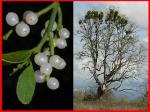
Mistletoe and the Garry Oak Tree

At this time of the year in many western and European countries you will see mistletoe put up as a holiday decoration.  Is it a native plant in the Cascadian bioregion?  Yes.  It is called a hemi-parasitic plant.  That is it lives in a symbiotic relationship with other plants and is also considered a parasite to trees.

There are many myths about the power of mistletoe to bring humans together.  Thus it is the custom of many to place mistletoe above a door and encouraging people to kiss.  In one custom men have the privilege of kissing a woman under it- plucking each time a berry from the stem.  When all the berries are all plucked the privilege ceases.

But mistletoe has other important uses to the forest ecosystem.

There are actually three types of mistletoe located in our bioregion. Two live in conifers.  The Douglas dwarf mistletoe (Arceuthobium douglasii) lives in the Douglas fir.  And the Western dwarf mistletoe (arceuthobium campylopodum) is most often found in the Western Hemlock but can also be found on pine, juniper, and other conifer trees.  And last, the most popular type of mistletoe is found in the Garry or White Oak located in oak savannahs throughout the region.

Garry Oak mistletoe (Phoradendro flavescens) is the type popular during our Solstice/Christmas season.  It was long thought to be purely parasitic and might even kill the host tree.  Now, after years of study the plant is actually known to be part of a unique ecosystem that encouraged oak tree propagation.

For instance the name Mistletoe is attributed to old German and old English language and means twig dung.  Because birds eat the seeds and the seeds are deposited in their dung and fertilized. The same birds eat other cone seeds, and acorn’s and carries them to other sites to be planted and fertilized.   The acorn of the Oak is picked up by squirrels that also come to the oak for the berries of the mistletoe.

The mistletoe found in conifers is very unique.  It causes the tree to produced odd shaped branches that grow closely together in a thatch.  This is called a “witches broom”. This type of mistletoe is often overlooked because it occurs high up in the conifer.  This thatch makes a wonderful nesting site for some very vulnerable birds in our region such as the Northern Spotted Owl and the Marbled Murrelet.  A wide range of animals depend on mistletoe for food, consuming leaves, young shoots, transferring pollen between plants and dispersing it’s seeds.

Medicinal aspects of Mistletoe

First peoples and people who live in Western and Northern Europe used Mistletoe to cure aliments of the circulatory and respiratory system.  A tincture or infusion was prepared and the solution was used sparingly.  The overuse of the plant parts can cause gastric problems that can lead to diarrhea or worse. It is not uncommon for a teacher to tell children that the berries are poisonous.

According to the book “A Modern Herbal” by Mrs. M Grieve, mistletoe was traditionally used as an effective treatment for convulsive disorders such as epilepsy. Mistletoe has also been used as an experimental treatment for cancer, though scientific evidence of its effectiveness as a cancer cure is limited. Medicinal forms of mistletoe include teas, tinctures and injections. Mistletoe extracts that are depleted of lectins, one of the toxins in mistletoe, are less likely to produce adverse reactions.

IS Mistletoe poisonous?

Mistletoe can make cats and dogs and children quite ill if ingested in high enough doses. It is best to keep mistletoe up high while decorating.  Young children may think the berries are eatable.  But it is like most powerful healing plants, a very useful plant if used correctly.

In modern times mistletoe has been studied to see if it can treat cancer. It was found to stimulate the immune system increasing the amount of white cells that attack the malignant cells. Much more investigation needs to be done to understand how this happens.  And a homeopathic does of mistletoe was formulated by Rudolph Steiner as he believed that mistletoe diluted (homeopathic) could treat a faltering of the body’s spiritual defenses.    Again it is best to contact a qualified herbalist, naturopath or physician. 

For more about native plants used in celebrations check out this excellent article on Wikipedia called “Festive Ecology

Read Full Post »

Oregon Grape

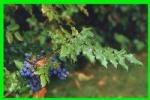
Oregon grape is one of my favorite plants. It is known by many healers as the goldenseal (Hydrastis canadensis) of the West Coast. I have used it to heal many ailments, including those of my cat and other animals. I’ve also used it to make dye for wool and basketry and to eat the berries for nutrition. All parts of the plant are valuable and powerful healers.  It is a plant to be respected!

Oregon grape lives in a tight, healthy tribal community, a perfect mirror of how a healthy human community once lived. It is very important to honor that community when harvesting this plant. 

Go to the Oregon grape community with right intent.  If you are a commercial “wild crafter” trying to make your quota, stay away!  Oregon grape is a powerful plant.

Harvesting the Oregon grape

Habitat: The Oregon grape lives throughout the western part of North America, in mountainous areas on wooded slopes that are below 7000 feet. Oregon grape plants exist in a specialized ecological community. Oregon grape roots and thrives under especially powerful healing trees like red cedar, sequoia, and Sitka spruce. 

Intention: Your intention should be first to learn the lesson the plant wants to teach you. Second, you should intend to use this medicinal plant wisely. Third, you should be respectful in harvesting, and fourth, you should always leave thankful for the medicine.

I guess I could also say that what I just shared with you should be the way to harvest all plants.

Selection: Never harvest the largest central plant.  This is the mother plant, a vigorous plant whose roots reach out to the whole community. Sometimes if the community is quite large, there will be more than one mother plant.  Think of these plants as tribal leaders. The largest plants in the community attract certain bacteria to the community soil, and they draw insects, other plant chemicals, and earth worms and other tunneling creatures that feed the community.

The largest plants are not always the ones that have the most color or the strongest medicine.  Be respectful–the plants to harvest are the smaller ones. Oregon grape is best harvested in August or September when it is full of berries.  It is OK if there are a few flowers on the plant.

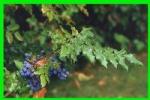
Find the Oregon grape community. Look out in front of you, and you will see a plant whose leaves are especially green. The berries on the plant will be full and deep blue; the flowers, if still blooming, will be brighter than the others in the community. This plant will be in the outer circle of the community, not too near an animal or human path.

Root Harvest: When harvesting the root, slightly uncover the soil around the plant root. Do not pull up the plant!  Find a side root, not the tap root.  (The tap root is central to keeping the plant alive.  It is the largest central root that provides nourishment for the plant.) Use a sharp knife that has been cleaned with an organic seed oil like olive oil or sunflower seed oil.  Keep this knife clean between harvests.   Always place an offering to the Oregon grape next to the plant.  I carry tobacco, Mayan corn, or sunflower seeds that I grow especially for offerings.  Be thankful.  A root harvest is a wonderful gift from the Earth. I talk to the plant when I am harvesting.  I tell the plant that I will use its root wisely.  I talk about the healing that I need to do and ask for wisdom about the best way to proceed.  I sit with my journal and write down what comes to me about the plant.

Using the Roots

The root of the Oregon grape contains strong medicine. The bright yellow root, a color caused by an alkaloid called berberine, can also be used for dye. Berberine, the most studied of the alkaloids, has been shown to possess fungicidal and antibacterial activities as well as resistance against protozoa such as Giardia lamblia, Trichomonas vaginalis, and Entamoeba histolytica. This is a very powerful healing plant and practitioners should consult a plant healer to learn to make the tinctures and infusions.

The Oregon grape root is the most commonly used part of the plant. Recent studies indicate that M. aquifolium contains a specific multidrug resistance pump inhibitor (MDR Inhibitor) named 5’methoxyhydnocarpin (5’MHC) which works to decrease bacterial resistance to antibiotics and antibacterial agents.1

Oregon grape root is used almost exactly like other Berberis and goldenseal species, as an alterative (an agent that gradually changes a condition), antibiotic, diuretic, laxative, and tonic. It is commonly used internally to detoxify the blood in an effort to cure skin problems, and occasionally it is used as a treatment for rheumatism. In homeopathy, Oregon grape is used as a tincture for skin diseases, like acne, eczema, herpes, and psoriasis.

Using the Berries

Many of the First Peoples of Western Cascadia used the berries for food.  There was no difference between food and medicine for these indigenous peoples.  They recognized that whatever you put into your body caused healing or disease. There was no such thing as recreational food.  Native peoples used a few berries mixed with Salal or some other sweet berries as a staple dried food in the winter months.  Today the berries are made into jelly (mixed with other sweet berries or fruit). The berries are also used medicinally to cleanse the liver and gall bladder and to treat eye problems.  Don’t take all the berries on a plant; leave some for the birds and wildlife.

Using the Stems

The stems of Oregon grape were used by native peoples as a dye.  Stems were shredded with Oregon grape root and soaked, and a bright yellow dye could be extracted from the mixture.  I use sharp clippers to cut branches from a plant. When harvesting the berries and the stems, take a small amount from each plant.

Read Full Post »

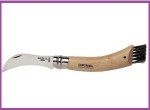
Opinel hooked-bill knife

When I go out into the forest and wilderness areas I go prepared to meet up with extrordinary wild life, unknown weather and terrain and beautiful environments. I am prepared for my own safety too.  Here is what I carry.  My day pack includes the following:

1. A good pair of locking hand pruners and a pair of long handled pruners as well
2. Opinel hooked bill knife – I have some special tools I use when harvesting plants. I carry an Opinel hooked bill knife that closes into the handle. It has a brush on the other end of it that I use to brush off dirt and other debris. This knife is really good for harvesting mushrooms and roots.
3. A triple hand lens magnifier – this hand lens magnifies to 5x, 10x and 15x and will close to become 30x. This lens helps me to identify plants by their tissue and small parts.
4. Swiss army knife – provides lots of gadgets.
5. My camera – I love to take pictures of plants. I use these pictures to create my illustrations and to share on my website.
6. Drinking water
7. Rubber boots and a rain slicker for the winter, and washable shoes for the summer and an extra pair of warm socks.
8. A good hat to keep the sun off my head
9. Collection bags.
10. First aid kit that includes matches wrapped in plastic
11. A good compass
12. Binoculars
13. A high energy snack
14. Good maps – forest service maps are the best
15. A whistle – to blow if I get lost or run into a animal I do not want to be near.
16. I sometimes also have a bell to attach to my pack if I think there might be bears around.

17. I wear layered clothes in case I come upon a change in weather

18. My cell phone with the 911 GPS turned on. If I ever get lost, people will be able to find me hopefully.

Here is a link to a great website that has most of these tools available

http://www.compleatnaturalist.com/mall/folding_magnifiers.htm

Read Full Post »

“The ultimate role of ethnobotany lies not in the identification of new natural products for the benefit of the modern world, but rather in the illumination of a profoundly different way of living in relationship to nature.” -Wade Davis

                         Who is Wade Davis?  Follow the link

Read Full Post »

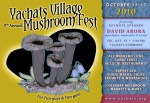
It’s that time of year again!  The Yachats Village Mushroom Fest.  OCTOBER 15-17, 2010  – It cost $5 for the weekend.  The meals are extra and keynote speaker cost extra.  I went last year and it was so much fun and very informative.  The speakers and mushroom identification events were superb!  Take a walk on the wild side.  Connect with the fungi!

 Again, I attended last years event and the speakers were very informative.  Yachats is located on the Oregon coast just south of Waldport, Oregon.  A beautiful drive this time of year.  I learned a great deal about fungi found in the Cascadia bioregion.  There are actually hundreds of fungi that are edible and medicinal located in our forests and valleys.  First peoples and settlers used some of the fungi for utility too.  The fungi was used for Bowls, shoe soles, bags etc.  We were taught how to cook and yes…we did eat some of these delectable forest specimens. The fungi are high in protein and other nutrients. The medicinal value are amazing.  The far east has used mushrooms for healing non-stop for thousands of years.

  Every hour a bus would come and pick us up and take us into the forest for a FREE walking lectures.  We learned how to identify the mushrooms and learned about the forest ecosystem that supports and thrives on this important fungi.

Also during the day are many workshops.  Check out the link for a full schedule.  From mushroom identification, to cooking and using mushrooms for fiber dye…check out the schedule.

This year the keynote speaker is DAVID ARORA Acclaimed mushroom expert and author of Mushrooms Demystified  and All That The Rain Promises & More will deliver the festival’s opening night keynote address. Friday, October 15 at 7:00 PM.  Admission $12, $8 students.  He will also be offering a full-day workshop on Sunday as well. 

Get out of your house!  Get away from the computer.  Go to the coast and have a really wonderful time learning about the bounty of the ecosystem we live in.

Here is a link to their website:  The Yachats  Mushroom Fest

Read Full Post »

Oregon Grape

This is the first of 14 essays that I wrote on plant knowledge that appeared on the Portland Indymedia Website from January 12, 2008 until May 8, 2010.  They appeared as skill shares. People were encouraged to comment and share their own level of plant knowledge. I am reposting the 14 essays with updates and changes. I will also be archiving them on this website so they can be easily accessed. Please feel free to comment on each weekly essay.  There is a link to the original essay that appeared on Portland Indymedia.  The posts include interesting comments.

Let us begin this important discussion.

I must start by explaining that I call this land, this ecosystem and nexus of ecosystems stretching from British Columbia to northern California, Cascadia.  I will reference Cascadia throughout my writing and will sometimes, when necessary, identify a place more specifically by state, valley, or mountain range.  Much of what I will say about plants in Cascadia is true for plants across the Earth.  The Earth is made up of a connected series of ecosystems that support plants, humans, and all other creatures.  I believe in the Gaia hypothesis put forth by James Lovelock and others, which proposes that the living and nonliving parts of the earth interact in a complex system that can be thought of as a single organism. And we are a part of that organism – not apart from it.

I am a longtime Cascadian. I was born here in Oregon’s Willamette Valley and grew up with the ways of a true wild child. I attended school and was part of a very large family, but every other moment of my life outside those realms I spent close to the earth and the plants.  I lived close to a white oak forest and learned about the plants from the plants themselves.  I loved the crawling animals, the birds and all creatures I found in that amazing forest. In that forest I found the divine. I lived close to the foot of Mary’s Peak in the Coast Range, a mountain that the native Kalapuya called Tamanawis, “place where the spirit dwells.”  When I was an older child in my teens, I ran wild on the slopes of the mountain – especially on the North Trail.  This trail was where Kalapuyan children were sent for their vision quests.  I had a father who loved the Earth and helped me to understand its plants and learn how to identify them.  He encouraged me to draw and paint pictures of the plants as a way of understanding them.  He did not know about their healing abilities, but  he sensed that some knowledge had been lost about these plants.  My father was a longtime organic gardener, and for a time our family raised about 50 percent of our food from the earth.  I learned a great deal about growing,drying, preserving, and harvesting plants from my parents.

In my early teens I was able to attract another great plant teacher: a woman simply called “Grandma,“ who lived not far from me. She lived across a couple of fields from my home..  Grandma taught me to harvest the tiny purple center of Queen Anne’s lace for use as a natural dye.  She was my most important human plant teacher. She told me about the spirit of each plant.  I was taught that specific plant families do not always react in the same ways in each human dose,  that we all attract plant healing in different ways.  This is the inverse of what corporate medicine teaches today.  Teachings such as homeopathy and the use of flower essence (Bach Flower Remedies) also teach that the healing must start with the human spirit and that all healing starts with emotions and energy.  I was also taught that to achieve proper healing,  a healer must be able to observe the progress and changes in a human or animal over time.  My most important teacher was the plants themselves. Through observation and use of the plants to heal myself and the animals on our farm, I was able to learn essential techniques used in plant healing.

To understand fully my relationship with the plants of Cascadia, I sought out stories about how native peoples used local plants. And I discovered an attraction to several plants.  I will start by teaching what I know about some essential plant species found in Cascadia.  These species are important to me, and you may find that  you are drawn to other plants in the region.

As I teach you about the important healing plants of Cascadia, I will also encourage you to observe yourself and note what plants you are attracted to. Understand that many times the attraction is mutual, and that the plant  that draws you in may be trying to heal you or bring you back to a state of balance with the natural world.

I will be covering how to identify and harvest the plants that I think we should all know about.  I also plan to discuss how to use these plants for nutrition and for emotional, physical, and spiritual healing.  I will provide resources for additional learning about each plant and share some ideas on how to use plants (not trees) for shelter and other necessities such as clothing and fiber…

 Before you can learn about healing and nutritional plants, you need to learn the lay of the land, and you must grow aware of the spirit force that the Earth gives us through plants.  Plants are more than inanimate objects put on the Earth for our enjoyment – they are part of us and we are part of them.  We need to have an understanding that everything in heaven and earth is connected as one big system and that plants are as much a part of our bodies, minds, and spirits as anything else in the ecosystem that we live in.  For too long humankind has been immersed in the idea of a mechanized world.  Many humans mistakenly believe they can treat the Earth and our bodies like machines with exchangeable parts.  Many believe they can remove or abuse a body part without harming the whole of the body.  A similar attitude perseveres about plants.  Yet as with human bodies, when you remove or abuse a plant community, you bring imbalance and dis-ease to the whole.

Plants are amazing Earth entities.  Yet we have lost so much knowledge about how to interact with them and gain health and wellness through their use.  There is a movement amongst permaculturists and plant healers to collect the stories of how native peoples interacted with plants – the Ethnobotany of plant knowledge.  The following is information that I gathered during a talk that I attended at the 2008 gathering of permaculturists in Eugene, Oregon put on by the Eugene Permaculture Guild.

The speakers were from Bill Burwell, a Kalapuya researcher, and Jerry Hall, an ethnobotanist who teaches at Lane Community College in Eugene, Oregon.

Bill Burwell spoke at length about the relationship between the Kalapuyans who lived in the Willamette Valley of Oregon.  He said that at the start of each harvest season they first had a gathering ceremony.  Great respect was given to the earth and the process of harvesting.  The Kalapuyans expressed gratitude for the harvest.  „The spiritual leader of each winter village site would harvest a few articles of each resource, bring it back, prepare it in a ceremonial way, bless the plants or animals that were responsible, and then the regular harvest could begin.“

Burwell reported that there was a belief that all plants and animals, including humans, were part of the same lifeforce, family and community. „As above, so below“.

Burwell spoke of a word that was used up and down the Willamette Valley, the lower Columbia, and into the Salish area of Washington and British Columbia.that expressed this reverence for life: Tamanawas. Burwell said it’s been translated as spirit power. People on a vision quest would look for thier Tamanawas. Burwell said that what  Tamanawas really related to was a person’s ability to interconnect with all the rest of nature. Burwell reported that often a persons ability to find a certain plant for healing happened because they were able to connect with nature on a energetic level. „The plant actually was the teacher of the person who was going out on the search“, Burwell said.

Jerry Hall spoke about language and songs that were used to connect with nature.  Hall spoke about first people gather songs that would connect them to a plant. The songs were located in the ether world and if one was accepting, the song would come to them and then they would find the plant. „ My experience is that singing evokes something from us that is beyond talking and gives expression to prayer“, Hall said

Both Burwell and Hall agreed that people 500 years ago knew where everything was in nature and the people took care of it and respected it.

Original Essay with comments found at http://portland.indymedia.org/en/2008/01/370936.shtml?discuss

Other resources:

Eugene Permaculture guild:  http://www.eugenepermacultureguild.org

Read Full Post »

« Newer Posts